Spare Keys Without the Signpost: Smarter Key Storage for UK Homes

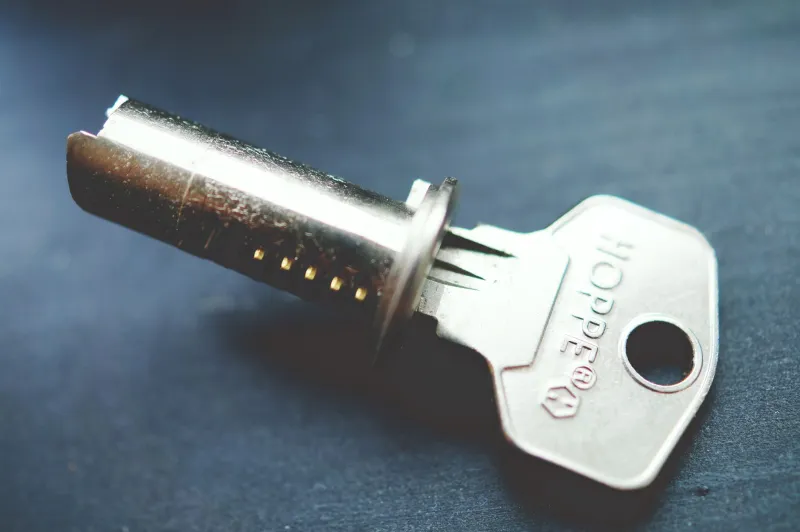
Photo: Michael Garlick , CC BY-SA 2.0, via Wikimedia Commons
Key safes get a rough press, and mostly it's deserved. Not because the idea is bad — it's genuinely useful — but because of where they end up. Screwed to the front wall, at knee height, roughly a metre from the door, in line with the house number. At that point it isn't a security measure. It's a labelled clue.
That said, plenty of UK households need one. Carers arrive at 7.40am when you've already left. A cleaner needs access on a Thursday. A relative drops in to let the dog out. Pretending those needs don't exist doesn't make anyone safer; it just pushes people towards leaving a key under a plant pot, which is worse in every measurable way.
So let's talk about doing it properly.
Why the little box beside the door gets noticed
Burglars aren't usually master criminals. They're people walking past, scanning, sometimes on repeat visits over weeks. A key safe is a visual flag: it says there is a key here, and someone in this house relies on it. Even if the box is tough — and decent ones are — it tells a stranger something useful about your routine.
The tell-tale signs are easy to spot from the pavement:
- The box sits at eye level on the front elevation, visible from the road
- It's within arm's reach of the door
- It sits right next to the house number, or under the porch light
- It's mounted on a fence panel or a wooden gate, which any determined person can unscrew or break
None of that is a disaster on its own. But stacked up, it's a signpost. The aim isn't to make your key safe impossible to find — it's to stop it being the first thing a stranger reads about your home.
Placement: think like someone who isn't supposed to be there
Stand on the pavement outside your house. Then stand across the road. Then imagine walking past with your hood up. Where's the box visible from?
Good positions tend to share a few features. They're out of the direct line of sight from the street. They're around a corner, behind a gate that's shut, tucked under a step, or on a side return. They're fixed to masonry rather than timber — brick or block, with proper fixings, not two screws into a shed wall. And they're high enough that nobody can lean on them or get comfortable working at them.
Equally important: don't put the box where someone can hide while they fiddle with it. A recessed porch with a hedge and no lighting is not the spot you want.
Combination hygiene (the bit everyone skips)
Here's the thing about a four-digit code: it's short. Which makes choosing it the single most important decision you'll make about the box.
Change the factory code the day it goes up. Most key safes ship with a default that's printed in the manual and widely known. Leaving it as 1-2-3-4 or 0-0-0-0 is the locksmith equivalent of leaving the door on the latch.
Avoid anything guessable. Birth years, house numbers, 2-5-8-0 down the middle of the pad, repeated digits. If someone has done a bit of digging on the household, the code shouldn't fall out of that digging.
Share it the way you'd share a password. Tell the carer verbally or by message, and change it when the arrangement ends — not weeks later, not when you get round to it. If three people know the code and one of them leaves the rota, the code changes that week.
Check it monthly. A quick open-and-close in daylight, when you're not rushing. Key safes seize up, water gets in, and the last thing you need is a carer standing on the step at 7.40am with a code that no longer turns.
What your insurer will and won't like
Insurance policies vary, and it's worth reading the security section of yours rather than guessing. Broadly, though, a few patterns show up again and again.
Many UK home policies specify a minimum standard for external doors — often a five-lever mortice lock meeting BS 3621, or a cylinder rated to TS007 three stars. A key safe doesn't usually affect that, but it can affect how the claim is assessed if a loss is traced to a key obtained from it.
Some insurers ask about key safes directly, particularly if the property is left unoccupied for long stretches. Others are relaxed about them, provided the box is police-approved and properly fixed. Cheap, unbranded boxes with flimsy fixings are the ones that cause arguments after a claim.
If in doubt, ring the insurer and ask one plain question: does my key safe affect my cover? Get the answer in writing. It takes ten minutes and it settles the matter.
Lower-profile alternatives
If a key safe isn't essential, there are quieter options worth considering.
- A trusted neighbour. Boring, unfashionable, and still the most secure key storage method available. No code to guess.
- A keyless entry lock. A combination or smart lock removes the physical key entirely from the equation, though check the battery and app-reliance issues before committing.
- A locksmith keyholding arrangement. Less common in the UK than in the US, but some firms offer it for landlords and second properties.
- A small wall-mounted safe indoors. Useful for a spare that's only needed when you're home or when someone you've let in can reach it.
- Timed access via a carer's own keyed system. Care agencies often have their own procedures; ask what they recommend before fitting anything.
A five-minute checklist
Run through this before the drill comes out:
- Can the box be seen from the road, the pavement or a neighbouring window?
- Is it fixed into solid masonry with security fixings?
- Is the factory combination gone, replaced with something unguessable?
- Does only the current set of people know the code?
- Have you checked whether your home insurance mentions key safes?
- Is the box in working order and free of water ingress?
- Is there lighting nearby so a legitimate visitor isn't fumbling in the dark?
Get those seven right and the key safe stops being a liability. It just becomes a useful bit of kit on the side of a house — doing its job quietly, which is exactly what good security should do.