The Front Door Clock: What Burglary Timings Actually Tell UK Homes

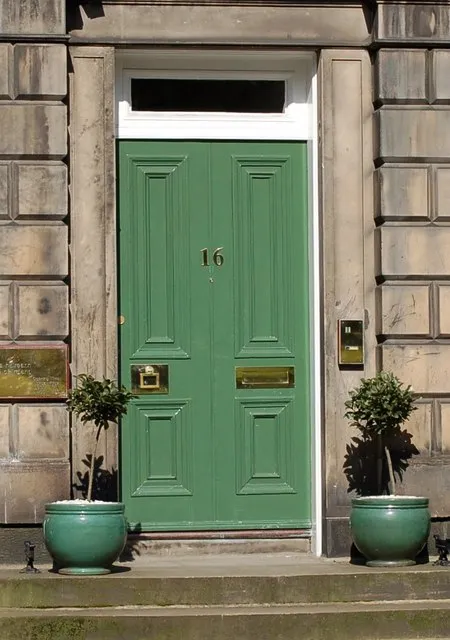
Photo: Photograph by Mike Peel (www.mikepeel.net)., CC BY-SA 4.0, via Wikimedia Commons
You have probably seen the line: a burglar needs only 30 seconds to get through your front door. It is memorable, shareable and just vague enough to survive a thousand reposts. But if you are standing in a UK hallway in 2026, wondering whether to spend £30 or £300 on your door, it is worth asking a less dramatic question: what does the evidence actually support?
The short answer is that no UK crime survey publishes a universal stopwatch reading for front-door break-ins. The longer answer is more useful for households.
Where the 30-second figure comes from — and where it does not
The claim is usually a mash-up of three things: security marketing, police crime-prevention leaflets and a handful of small studies or experiments that get repeated until they sound official. You will see versions saying six seconds, under a minute, five minutes or 'a few minutes'. They cannot all be true for every door, because doors, locks, frames, glazing and neighbourhoods are not the same.
The Crime Survey for England and Wales is the best long-run measure of household crime, but it measures victimisation, not the duration of an attempted break-in. Police recorded crime can tell us about reported burglaries and modus operandi, yet it does not provide a neat national average for how long an intruder spends at a door. Locksmith experience is valuable too, but it is skewed: we see locks that failed, doors that were forced and homeowners who are worried. We do not see every burglar who walked away.
So treat the 30-second line as a prompt, not a dataset. The honest version is that time varies enormously. A flimsy door with a poor cylinder can go quickly. A solid door with a well-fitted lock, a strong frame and a noisy approach may take longer — or may simply persuade someone to try next door.
What the data can support
UK burglary data does support a few broad points. Domestic burglary has fallen a long way since the mid-1990s, though it has not disappeared. Police recorded burglary in England and Wales still runs into the hundreds of thousands of offences annually. Detection rates are low. And the Crime Survey has consistently shown that most burglaries are not dramatic heists; they are opportunistic, quiet and quick to abandon if a property looks occupied, overlooked or awkward.
That last point matters more than a stopwatch. Burglars are not usually trying to defeat your door in a vacuum. They are weighing up noise, visibility, lighting, neighbours, dogs, alarms, cars on the drive and whether anyone is home. A door that looks like a fight is a less attractive door.
Visible locks are a signal, not a suit of armour
A good lock does two jobs. It delays entry, and it advertises that entry will not be silent or instant. For a UK front door, that usually means a British Standard mortice lock such as BS 3621, or a decent multi-point lock on a composite or PVCu door. On PVCu doors, an anti-snap euro cylinder with a recognised rating is a sensible baseline. A visible, well-fitted lock is not a guarantee, but it is a credible deterrent.
The catch is that hardware is only as good as what it is fixed to. A top-grade cylinder in a flimsy door with a rotten frame is money poorly spent. Before you add another gadget, check the door closes squarely, the frame is solid, the hinges are sound and the letterbox is not a handy opening for reaching inside. A locksmith would rather fit one good lock properly than bolt three mediocre ones onto a weak door.
Noise, light and the cost of being noticed
Most domestic security advice is really about increasing the chance of being seen or heard. Gravel, a creaky gate, a motion-sensitive light, a doorbell camera and a well-positioned alarm bell box all do the same basic job: they make the approach feel less private. None of them makes your home impregnable. All of them can make your home a worse bet than the one next door.
Lighting needs a bit of thought. A blinding floodlight that annoys the street is not security; it is a neighbourhood dispute. Dusk-to-dawn bulbs, timers and modest motion sensors are usually more useful. If you are out, a light on a timer and a radio or TV on a timer can do more than a 'Beware of the dog' sign when there is no dog.
The back door and the side gate are part of the front door
It is easy to obsess over the front door while the back door has a tired lock and the side gate has a broken latch. Police crime-prevention advice regularly points to insecure doors and windows as factors in domestic burglary. Walk around your home after dark and look at it as a stranger would. Which door is least overlooked? Which gate gives the easiest route to the rear? Which window is left on the latch in warm weather?
If you rent, you may need permission before changing locks or fitting extra hardware. Ask the landlord or letting agent in writing. A good locksmith can advise on reversible options, but nobody should be drilling a rented door without consent.
A sensible priority list for 2026
Start with the door you actually use. Check the lock, the frame and the cylinder. If the door is hollow, warped or poorly fitted, fix that before buying a smart lock. Secure the back and side routes. Add simple timing and lighting. Keep keys out of sight. Then consider an alarm or camera if you want one, not because a social post frightened you.
The 30-second myth is not worthless. It is a useful reminder that doors are not invincible and that small delays matter. But the evidence does not support panic-buying. It supports a slow, sensible look at your own front door — and a conversation with a locksmith who will tell you what is actually worth changing.