Bolted to What? The 20-Minute Door Frame Check Worth Doing Before You Buy Another Lock
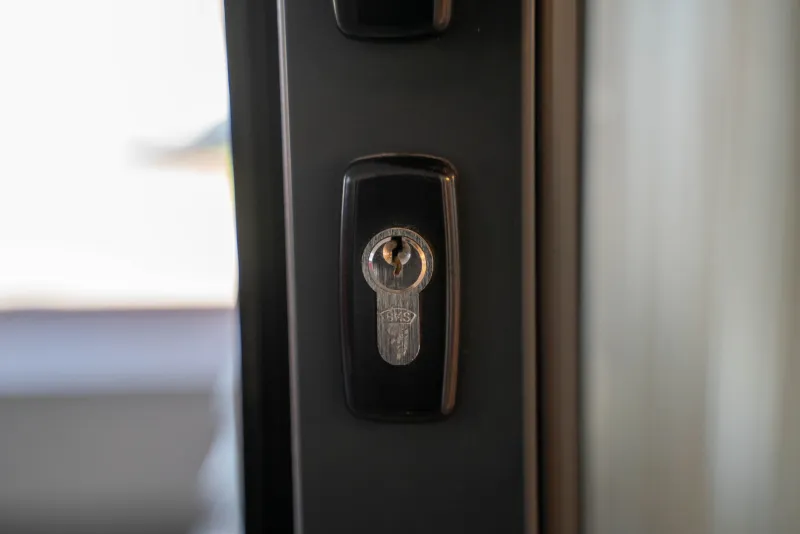
There is a particular kind of disappointment that comes from spending £80 on a fancy anti-snap cylinder, fitting it beautifully, then watching a door flex like a garden gate when you lean on it. The lock is fine. The bit it is bolted to is not.
It is easy to think of the lock as the security. In reality, the lock is a small metal component that holds a door to a frame. If the frame moves, splits, or was never reinforced in the first place, the lock is doing little more than keeping the door politely closed. Before you buy another upgrade, spend twenty minutes checking what the lock is actually attached to.
The bit everyone skips: the strike plate
Open your front door and look at the edge of the frame where the latch and deadbolt slot in. That metal plate is the strike plate, and it is the lock’s handshake with the house. Two things matter: how it is fixed, and what it is fixed into.
Many strike plates come with screws barely longer than a thumbnail. They grip the frame, not the wall behind it. A solid strike plate should be held with screws long enough to reach the timber stud or masonry behind the frame — usually 75mm or more — and the plate itself should be thick, not the pressed tin that bends when you look at it firmly.
If you can wiggle the strike plate with your fingers, or see a hairline crack in the timber around it, that is your first warning sign. The lock is fine. Its anchor is not.
The shove test (do this gently)
Close the door as normal, but do not lock it. From the inside, press firmly on the door near the lock side, then near the hinge side. You are not trying to break in; you are watching for movement. Does the frame flex? Does a gap appear between door and frame? Does the door rattle in a way that feels loose rather than snug?
Now do the same from the outside with the door locked, using the flat of your hand — a gentle push, not a shoulder barge. A tiny bit of give is normal on older timber doors. A frame that moves visibly, or a door that shifts several millimetres, is telling you something.
Hinges: the quiet weak link
Burglars do not always attack the lock. Sometimes they attack the side with the hinges, because hinges are often fixed with short screws into softwood. Open the door and check each hinge: are the screws tight? Are any missing, rusted, or sitting proud? Is there a split in the timber around the screw holes?
On timber doors, a set of hinge bolts — small dome-topped bolts fitted to the hinge side of the door — is a cheap and effective addition. They stop the door being levered out of the frame even if the hinges are attacked. On uPVC doors, check that hinges are not cracked or loose; these are usually adjusted or replaced rather than reinforced with bolts.
Timber versus uPVC: two different conversations
On a timber door, the frame is usually a hardwood or softwood surround. It can be strong, but it can also be old, dry, and split. Look for cracks running from the strike plate or hinge screws, soft wood around the bottom corners, and any sign the frame has been patched with filler. Long screws, a reinforced strike plate, and a London bar or Birmingham bar on the lock side can make a real difference without replacing the door.
On a uPVC door, the frame is a plastic shell around a metal or timber reinforcement. The weak points are usually the corners and the area around the lock keeps. Look for cracks in the plastic, a strike plate that has pulled loose, or a door that has dropped and no longer sits square in the frame. A uPVC frame that flexes around the lock is a job for a competent fitter — not something to solve with a bigger cylinder.
The pound-coin gap check
Take a pound coin and run it around the closed door, between door and frame. It should not slide into gaps easily at the lock side or the top corner. A consistent gap is fine; a gap that opens when you push the door is not. On older homes, a certain amount of draught is normal, but a gap large enough to see daylight around the lock area is worth investigating before winter.
Warning signs worth taking seriously
- The strike plate moves when you press it, or the screws spin without tightening.
- The frame around the lock is cracked, split, or crumbling.
- The door catches or rubs at the top or bottom, suggesting the frame has moved.
- Hinges are loose, rusted, or fixed with short screws.
- On uPVC, the frame flexes around the handle or lock, or the door has dropped.
- You can see daylight through the gap at the lock side when the door is shut.
Low-cost fixes before a full upgrade
If the frame is sound but the fittings are tired, start small. Replace short strike-plate screws with longer ones that reach the stud. Fit a reinforced strike plate or a door frame reinforcement bar. Add hinge bolts on timber doors. Tighten or replace hinge screws, and use longer screws where the timber allows. On uPVC, a locksmith or door fitter can often re-align the door and replace worn keeps without a new frame.
What you should not do is keep upgrading the cylinder while ignoring a frame that is clearly moving. A three-star, anti-snap cylinder is a sensible purchase — but it is only as good as the timber or plastic it is screwed into.
When to call someone in
If the frame is split, the door has dropped badly, or you are not sure whether the wall behind the frame is solid, get a professional opinion. A locksmith can tell you whether reinforcement will work or whether the frame itself needs repair. That is a cheaper conversation than replacing a door after an incident.
Start with the frame. Then buy the lock. It is the least glamorous order of operations, but it is the one that actually makes your front door harder to walk through.