The Inside Handle Test: Choosing a Front-Door Lock for Escape and Security

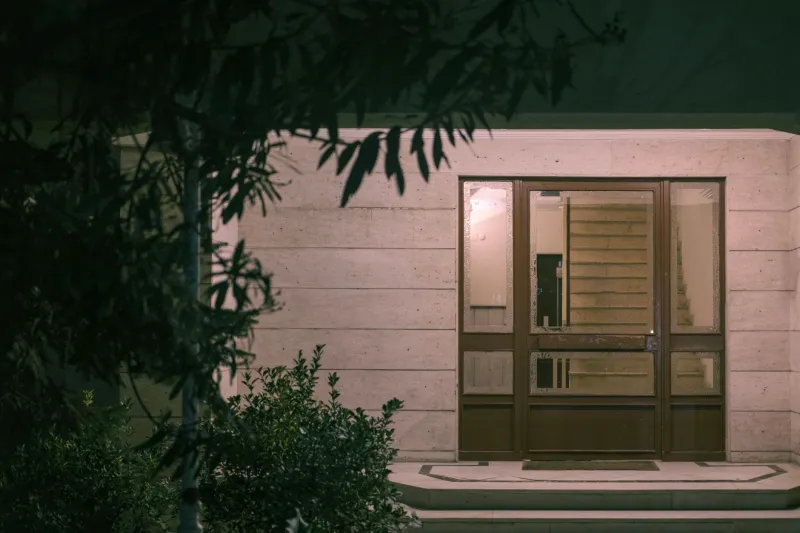
Photo: Basile Morin, CC BY-SA 4.0, via Wikimedia Commons
Most front-door lock conversations start on the outside: cylinder quality, snap resistance, anti-bump features, whether the door is uPVC or timber. All useful. But the part you touch at 3am in a smoke-filled hallway is the inside handle. That is where the thumbturn-versus-key question really lives.
Two locks, two different jobs
A thumbturn cylinder has a keyhole outside and a small knob inside. Turn the knob and the door opens; no key hunt. A key-only cylinder—sometimes called keyed both sides—needs a key on the inside as well. It is a common choice where a letterbox sits close to the lock or where a landlord wants one key routine throughout. Neither is automatically the secure one or the unsafe one. They solve different problems.
Escape is not a lifestyle preference
In a house, your front door may be one of several ways out. In a flat, it is often the only one. In a shared building, the final exit door and communal corridors matter too. If smoke or fire blocks the stairs, you need the door to open first time, in the dark, without reading instructions. A thumbturn gives you that single movement. A key-only lock can too, but only if the key is exactly where it should be—and stays there.
Many of us have heard advice to keep keys out of the lock to stop someone fishing them through the letterbox. That advice exists for a reason. But it can create a different risk if the key is then moved to a coat pocket, a handbag upstairs or a hook behind a closed door. The practical answer is not to choose a side in an online argument; it is to make a routine that works under stress.
The burglar's side of the story
Thumbturns are not a burglar's dream by default. A good anti-snap cylinder, a well-fitted door and a letterbox guard do a lot of work. The weakness people talk about is simple: if someone can reach the inside knob through the letterbox, they may be able to turn it. That is why the distance between your letterbox and lock matters. A restrictor or a letterbox with a cage can limit reach. If the lock is well below the letterbox, the risk drops.
Key-only locks make that particular trick harder. But they bring their own habits: keys left in the lock, spare keys on show, or a key that sticks when adrenaline is high. A determined burglar will also look at glass, door frames, hinges and poor fitting. The lock is one part of the door, not the whole story.
What insurers and landlords usually expect
UK home insurance policies vary. Some name a lock standard—often a five-lever mortice lock to BS 3621, or an insurance-approved cylinder—and some are more general. A thumbturn can be acceptable, but do not assume it. Check your policy schedule or ask your insurer before you spend money. Keep the receipt and any locksmith certificate; if you ever need to claim, paperwork helps.
Renters have a separate layer. You normally need your landlord's permission before changing a lock, and you should not leave the property less safe than you found it. A sensible locksmith can fit a thumbturn and keep the original cylinder so it can be refitted at the end of the tenancy. Put the request in writing, explain why—especially if anyone in the household has mobility issues—and keep the reply.
Leasehold flats and shared buildings add another check. The freeholder, managing agent or building safety assessor may have rules about door furniture and fire doors. Do not drill first and ask later. If the door is a certified fire door, altering it incorrectly can matter more than the lock choice itself.
A simple decision checklist
Use this as a starting point, not a substitute for advice about your specific door:
- Is this your only escape route? If yes, lean towards a thumbturn or another single-movement exit, provided it meets your insurer's standard.
- Is the letterbox within easy reach of the inside knob? If so, fit a restrictor or guard, or discuss a key-only option with your locksmith.
- Does your insurer name a standard? Match it, and keep the evidence.
- Do you rent? Get permission in writing and agree how the original lock will be stored or refitted.
- Is the building shared or leasehold? Check the lease and fire risk guidance before changing anything.
- Does anyone struggle with keys? Children, older relatives, disabled residents and regular visitors all benefit from a simple exit.
- Can everyone open the door in the dark? Test it. A lock that only one person understands is not a household plan.
The sensible middle ground
For many UK flats, a quality thumbturn cylinder on the final exit door, paired with a letterbox guard and a properly fitted door, is a reasonable balance of escape and security. For some houses—especially where the letterbox is close to the lock and the household is comfortable with a strict key routine—a key-only lock can work well. The important thing is to choose deliberately, not inherit a lock and hope.
Whichever you pick, practise the exit. Keep the route clear. Know where the key is, or know that the thumbturn turns. A front door should do two jobs at once: keep the wrong people out, and let the right people out quickly. If yours only does one of those confidently, it is worth a look this week.