Sticky Keys Season: A Rainy-Day Lock MOT for Timber Doors
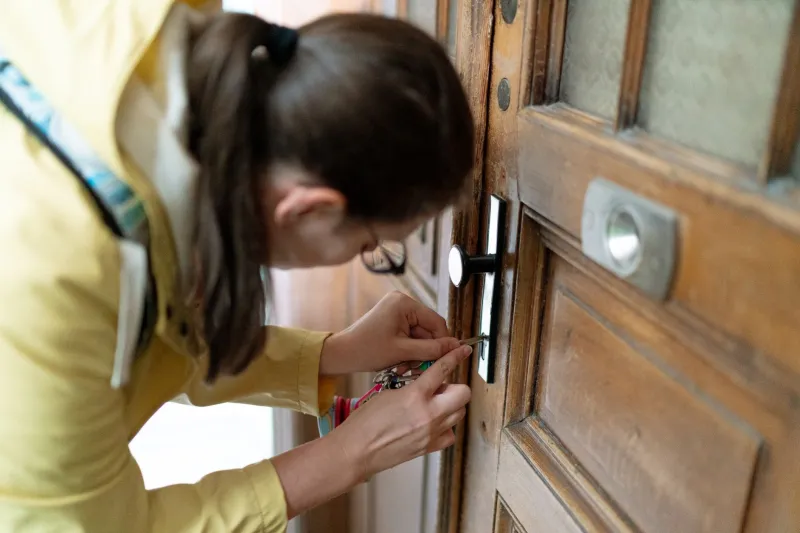
Autumn 2026 has already done that thing where it rains sideways for a week, stops just long enough for everyone to forget their umbrella, then starts again. For timber front doors, that cycle is less cosy and more mechanical. The door swells a little, the hinges take on a bit of moisture, the paint film gets damp, and suddenly the key that turned like a dream in July wants a small argument every morning.
The important thing to understand is that this is rarely a sudden lock failure. It is usually a slow drift. Your door has moved a millimetre or two, your latch is meeting the strike plate at a slightly different angle, and your deadbolt is doing most of its job but not quite all of it. That is worth catching early, because a lock that is only partly engaging is not really doing the job you think it is.
The quiet drift: what wet weather actually changes
Timber is good at many things. Staying exactly the same size in wet weather is not one of them. When damp air gets into the edges of a door, especially around the lock face and the bottom rail, the timber can swell. Paint and varnish slow that down, but they do not stop it completely. Add a bit of movement in the hinges and a doorstep that stays wet for days, and you have the classic autumn setup: a door that still closes, but no longer closes in quite the same place.
Composite and uPVC doors are not immune either. They tend to move less, but a dropped hinge or a swollen threshold can still throw the lock out of line. The difference is that timber gives you more warning signs, if you know where to look.
Four warning signs worth catching early
You do not need to become a lock expert. You just need to notice changes.
-
The key catches at the same point every time. A smooth turn should feel smooth all the way through. If there is a little hitch halfway, note it. If it gets worse after rain, that is a clue.
-
The latch does not click home. With the door closed gently, the latch should settle into the strike plate with a clean click. If it needs a push, a lift of the handle, or a shoulder, the door and frame are not lining up as they should.
-
The strike plate looks scratched or shiny. Metal tells tales. Fresh scuff marks around the strike plate or the latch keep usually mean the latch is clipping the edge rather than sitting cleanly in the hole.
-
The deadbolt does not throw all the way. Turn the key or thumbturn and listen. A deadbolt should extend fully without force. If it stops short, or the key feels tight at the end of the turn, the door has drifted and the lock is not fully engaging.
You might also notice the door rubbing at the top or bottom, a handle that feels slightly loose, or a gap around the door that has changed shape. None of these are emergencies on their own. Together, they are a wet-weather warning light.
A renter-friendly wet-weather lock MOT
This is a dry-day routine, or at least a dry-half-hour routine. It takes about ten minutes and it does not require tools, unless you count a cloth and a torch.
1. Dry the door edge and doorstep. Wipe away standing water around the threshold and the lock face. You are not trying to waterproof the door with a tea towel. You are just giving yourself a clean surface to inspect.
2. Test the lock with the door open first. Close the door, then open it and test the latch and deadbolt again. If the key turns smoothly when the door is open but fights you when it is closed, the problem is alignment, not the lock itself. That is useful information.
3. Look at the gaps. With the door closed, check the gap between the door edge and the frame at the top, middle and bottom. It should look even. A gap that is tight at the top and wide at the bottom suggests the door has dropped or swelled unevenly.
4. Check the hinges. Loose hinge screws are common and easy to spot. Do not overtighten anything, especially in a rented home. Just note whether the door feels loose or the screws are sitting proud.
5. Lubricate sparingly, and with the right stuff. A dedicated lock lubricant, applied in a small amount, is fine. Cooking oil, olive oil and random household sprays are not. They attract dirt and gum up the works. If you are not sure what to use, leave it and ask.
6. Keep the threshold clear. Wet leaves, grit and a swollen doormat can all interfere with the bottom of the door. A clean, dry threshold is a small thing that makes a real difference in wet months.
7. Note changes over a week. A sticky lock that improves after a dry day is telling you something. A sticky lock that gets worse in both wet and dry weather is telling you something else.
What not to do when the key sticks
Do not force it. A key that needs real pressure is a key that is about to teach you an expensive lesson. Do not squirt oil into the lock and hope for the best. Do not slam the door to make the latch catch. And do not start loosening strike plates or planing the door edge on a hunch, particularly if you rent. Small adjustments made blindly can turn a minor alignment issue into a proper locksmith visit.
If you rent, put the issue in writing to your landlord or letting agent. Keep it friendly and factual: the key is catching, the latch is not clicking, the deadbolt is not throwing fully. Include a photo or a short video if you can. That gives them something to act on and gives you a record if the problem gets worse.
When to call a locksmith
Call a locksmith if the deadbolt will not extend fully, the key binds even after the door has dried out, the door has visibly dropped, or water is getting into the lock face. Also call if you are renting and the landlord has not responded after a reasonable amount of time, or if the door will not secure properly at night. A lock that is not fully engaging is a security issue, not just an inconvenience.
When you call, have the basics ready: the door type, the lock type if you know it, what the key is doing, whether the door is sticking at the top or bottom, and whether you own or rent. A good locksmith will ask those questions anyway. At Leethel Locksmith, we would much rather talk you through a sticky latch in October than meet you at a locked-out doorstep in January.
The dry-day test is simple: if your lock turns smoothly on a dry Tuesday but fights you on a wet Wednesday, you have caught the drift early. That is exactly the right time to deal with it.